- Company
- Products
- Solutions
- Applications
- Contact


 EN
EN


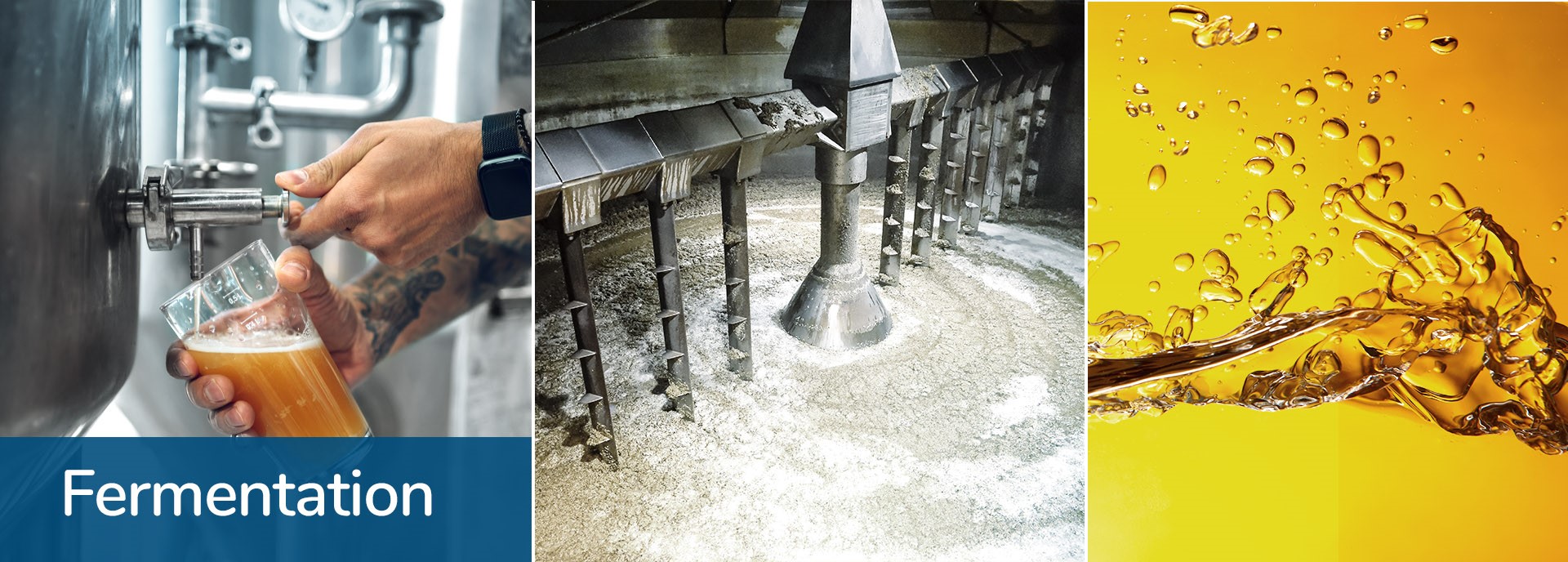
In industrial biotechnology, fermentation processes are used for the microbial conversion of organic substrates into target products such as ethanol, yeast, enzymes, organic acids or biogas.
The substrates used often contain carbohydrates, proteins, hydrolysates and ancillary components that are released or biochemically transformed during fermentation. In addition, microbial metabolism generates amino acids, proteins and cellular components that further intensify foam formation.
Additional foam-promoting factors include:
In anaerobic processes (e.g. alcohol or biogas fermentation), foam formation is mainly caused by the release of CO₂ in combination with foam-active components present in the medium.
In aerobic fermentations (e.g. yeast, enzyme or antibiotic production), process air is introduced to supply oxygen. The resulting gas bubbles, together with proteins and biomass, lead to particularly stable foam structures. In practice, aerobic processes are therefore generally much more foam-intensive.
Without targeted foam control, fermentation processes may suffer from fermenter overflow, product losses, contamination and fouling of equipment. Modern fermentation plants therefore rely on demand-driven, automated defoamer dosing.
Typical dosing strategies include:
For fermentation processes, defoamers are required that:
KEBO defoamers for fermentation, such as KEBOSPUM HES, KEBOSPUM FES or KEBOSPUM FEZ, are specifically designed to meet these requirements. They support stable, controlled production conditions while ensuring high process yields. Please refer to our overview of the key defoamers.

The products shown on our website are only a selection of our entire product range. There is no universal remedy for the rapid removal of impurities. Some can be removed well with alkaline agents, others better in the acidic range. The large variety of conceivable cleaning problems and the large number of additives, inhibitors and ready-to-use cleaning solutions offered by us make it advisable to obtain detailed advice before starting cleaning.
The same applies to inhibitors, defoamers, scale preventers, corrosion inhibitors, pickling inhibitors, etc. Depending on the plant, material, product and the type of boiler/cooling water is used, different individual challenges arise. We are well equipped for them.
Talk to us, we will be happy to help!
On request, we can analyze deposits in our laboratory and develop a cleaning strategy based on our many years of experience, taking into account the conditions on site.