- Company
- Products
- Solutions
- Applications
- Contact


 EN
EN


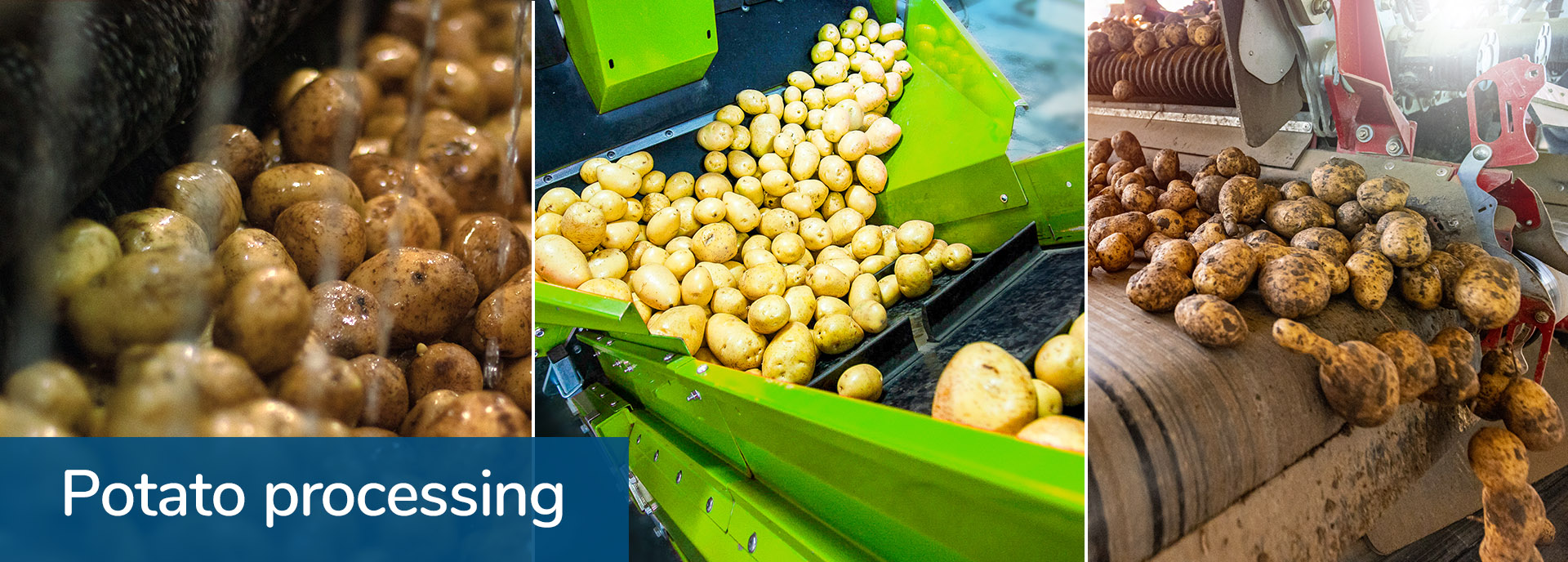
In the industrial processing of potatoes into French fries, chips and other potato products, foam formation regularly occurs in process water due to the interaction of plant-based components, intensive water circulation and intentional air entrainment.
Potatoes have a dry matter content of approximately 20–25%. This dry matter consists mainly of starch, as well as proteins, dietary fiber, minerals and small amounts of sugars, organic acids and fats. Depending on potato quality—affected by variety, cultivation conditions, fertilization and storage—the proportion of these components can vary significantly.
In particular, soluble proteins, starch degradation products, oligosaccharides and other surface-active substances released from the potato reduce surface tension and promote the formation of stable foam structures. These effects are further intensified by mechanical stress, temperature and water recirculation.
The foam-related mechanisms follow the same physico-chemical principles across all process steps, regardless of the individual stage:
In addition, raw material quality and potato storage conditions influence foam formation. Differences between varieties, protein and starch contents, as well as partial conversion of starch into sugars, can significantly increase the foaming tendency of the process water.
Typical process areas with increased foam formation:
The higher the concentration of foam-active components in the circulating water and the more intensive the water circulation, the more pronounced the foam formation—directly impacting process stability, hygiene, plant availability and operating costs.
Operational consequence: The targeted use of a high-performance, food-grade defoamer for potato processing is therefore a key factor in achieving:
The defoamer KEBOSPUM PP from the KEBOSPUM product range significantly reduces foam formation and thus optimizes the entire production process.
Our best practice for potato processing: This case study documents how a manufacturer processing approx. 200,000 tons of raw potatoes per year sustainably improved its dosing strategy, reduced chemical consumption and increased process reliability through the targeted use of KEBOSPUM PP—even with varying potato varieties and fluctuating starch loads. A practical example demonstrating how effective foam control becomes a decisive efficiency factor.

The products shown on our website are only a selection of our entire product range. There is no universal remedy for the rapid removal of impurities. Some can be removed well with alkaline agents, others better in the acidic range. The large variety of conceivable cleaning problems and the large number of additives, inhibitors and ready-to-use cleaning solutions offered by us make it advisable to obtain detailed advice before starting cleaning.
The same applies to inhibitors, defoamers, scale preventers, corrosion inhibitors, pickling inhibitors, etc. Depending on the plant, material, product and the type of boiler/cooling water is used, different individual challenges arise. We are well equipped for them.
Talk to us, we will be happy to help!
On request, we can analyze deposits in our laboratory and develop a cleaning strategy based on our many years of experience, taking into account the conditions on site.