- Company
- Products
- Solutions
- Applications
- Contact


 EN
EN



Unwanted foam formation occurs in almost all industrial production processes and can negatively affect efficiency, process stability and yield. High-performance antifoams and defoamers ensure stable operations, prevent production losses and improve overall process economics.
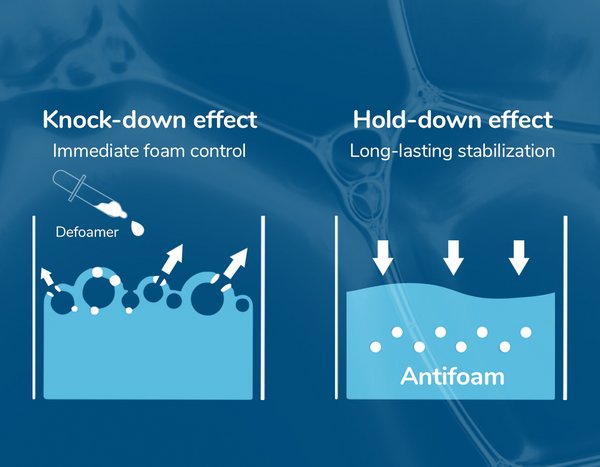
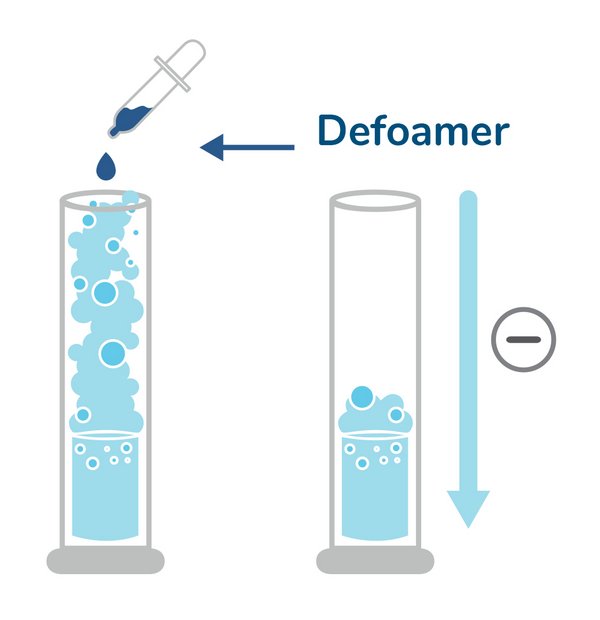
Foam is typically generated by surface-active substances such as saponins, proteins, plant glycosides, metabolites from biological processes, or surfactants. Our specially developed formulations either act immediately to destroy foam – knock-down effect (defoamer) – or prevent foam formation in advance – hold-down effect (antifoam) – while providing long-lasting protection against renewed foam formation.
Defoamers are highly versatile, stabilising processes and safeguarding product quality without negatively affecting individual process steps. Typical applications include fermentation, distillation, and the processing of fruit, cereals, starch, potatoes and sugar.
Product selection is application-specific and depends on factors such as:
Not every chemistry is suitable for every application.
As foam formation, process conditions and regulatory requirements differ significantly between industries, the selection of industrial antifoams requires an application-specific approach.
All KEBOSPUM® products comply with strict food-contact regulations (such as LFGB) and are Halal- and Kosher-certified.
This makes them ideal for sensitive applications in food, vegetable, starch and sugar production, where the highest levels of purity and international approvals are essential – without compromising performance.
The following sections provide a structured overview of the most important industries, foam types, applications and suitable KEBOSPUM® defoamers.

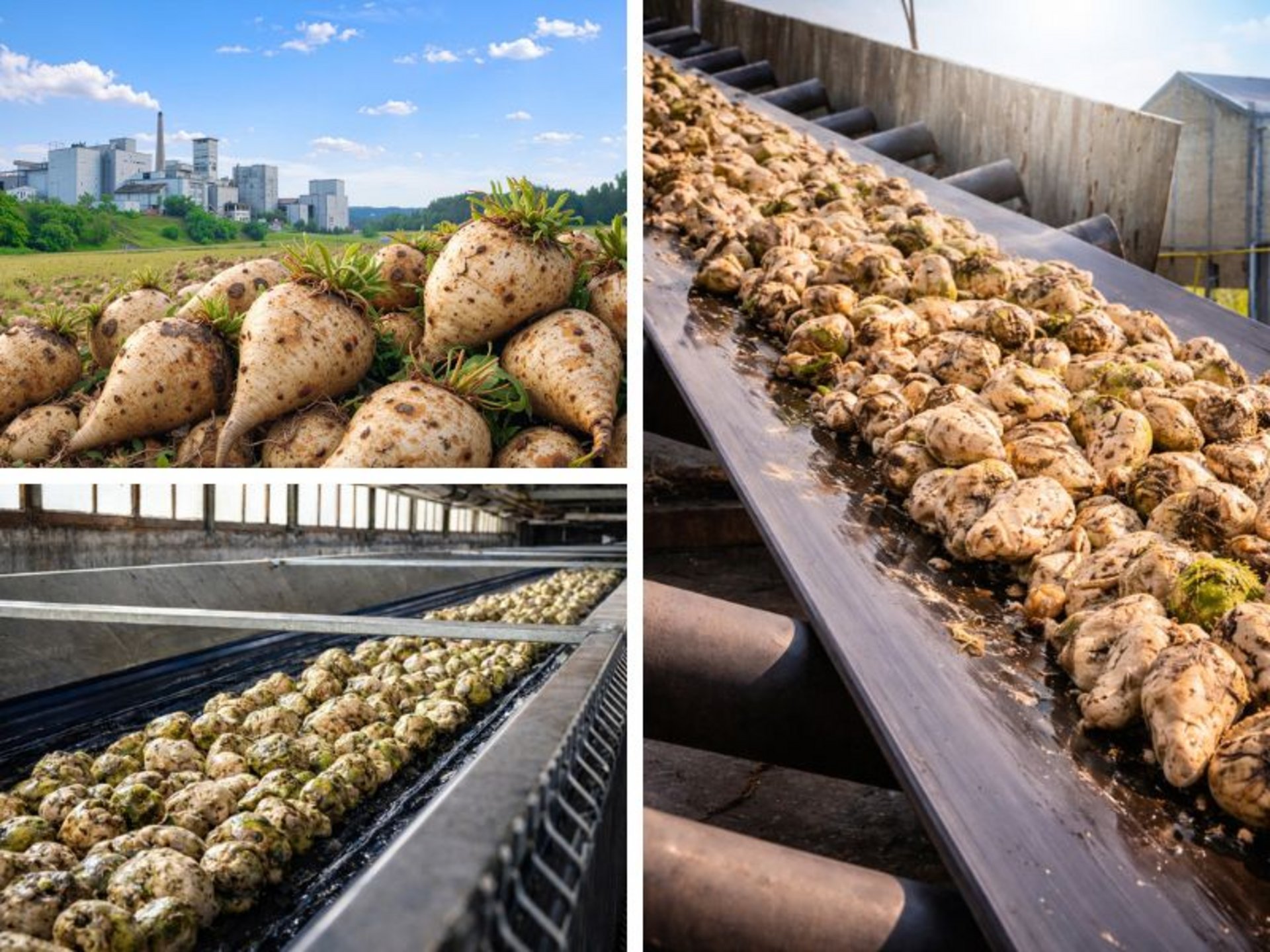
In the beet sugar process, pronounced foam systems occur particularly in diffusion and evaporation, but also during crystallisation, potentially affecting plant operation.
These foams are mainly caused by proteins, saponins and other non-sugar components combined with mechanical stress and temperature fluctuations. Defoamers therefore play a critical role in the process and are applied specifically at defined process stages.
KEBO supplies defoamers both for internal processing operations and for the flume water system in beet sugar factories. Due to their specialised formulation, they disperse instantly in the medium to be treated and quickly migrate to newly formed interfaces where they displace foam-forming substances such as saponins and proteins. Defoamers used within the main process streams provide consistently strong foam-breaking performance across different liquid phases.
Defoamers for diffusion, extraction, evaporation and crystallisation: KEBOSPUM KIS, KEBOSPUM KTX, KEBOSPUM KWX, KEBOSPUM HTS PL
Defoamers for flume water and beet washing: KEBOSPUM LBF, KEBOSPUM AS, KEBOSPUM BWS
Foam systems occur during washing, cutting and starch separation processes due to starch abrasion, proteins and fine organic particles.
Mechanical stress from pumps, screens and cyclones can further stabilise the foam. The main challenge often lies within a temperature range of 10–40 °C combined with fluctuating raw material quality.
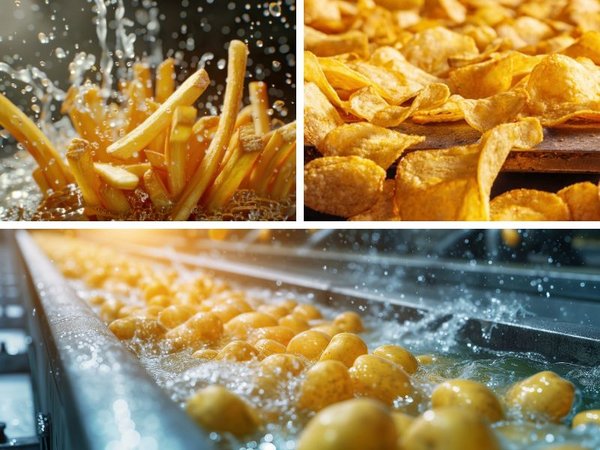
In our case study you can read how a large potato processor optimised its dosing strategy by using KEBOSPUM PP, reduced product losses and increased plant reliability – even under varying raw material conditions. The practical example demonstrates the impact that professional foam control can have in industrial potato processing.
In addition to KEBOSPUM PP, further defoamers for potato processing include: KEBOSPUM BWS, KEBOSPUM VPL, KEBOSPUM VZ series.
In these processes, soluble proteins, pectins, organic acids and natural surfactants are the primary causes of foam formation. Foam typically occurs during transport, washing and thermal treatment processes. Foam stability can vary significantly depending on the raw material (e.g. legumes versus leafy vegetables) and the degree of comminution.
Our defoamers for vegetable and fruit processing effectively eliminate even persistent plant-based foam systems – without aroma loss or unwanted residues.
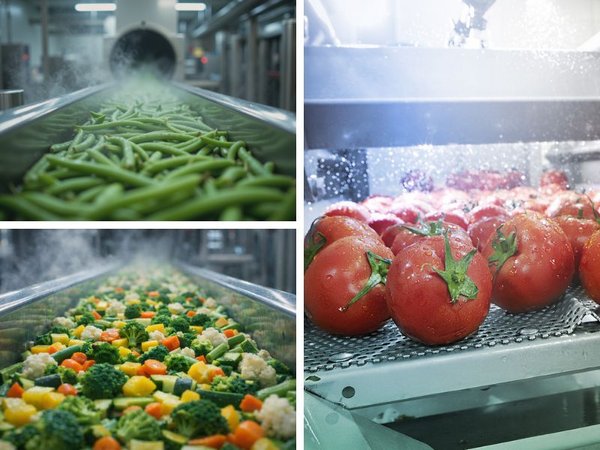
Contact us to determine the most suitable defoamer for your products and processing systems. Depending on raw material and process conditions, we recommend – KEBOSPUM BWS, KEBOSPUM PP, KEBOSPUM VPL, KEBOSPUM VPF or products from the KEBOSPUM VZ series.
In starch production, foam systems are primarily mechanically induced. Starch degradation products, proteins and process aids can reduce interfacial tension, leading to foam formation. Foam typically occurs in washing stages, hydrocyclones and during temperature changes.
Our defoamers for the starch industry effectively prevent foam formation throughout all process stages – from wet milling and centrifugation to drying.

Optimised defoamers such as KEBOSPUM PP, KEBOSPUM VPL, KEBOSPUM HES, KEBOSPUM FEZ as well as the KEBOSPUM VZ series, educe dosing requirements, minimise product losses and ensure stable processes even at high starch loads and with varying raw materials such as maize or wheat.
CO₂ release, protein structures and microbial metabolites generate highly stable foam systems. Temperature fluctuations, substrate changes and high agitation or aeration rates are particularly critical. Foam can directly affect process stability, gas yield and product quality.
Contact us to determine the right defoamer for your fermentation process. Depending on whether the process is aerobic, anaerobic or for bioethanol production, suitable products include: KEBOSPUM VPL, KEBOSPUM VPF, KEBOSPUM VPN, KEBOSPUM HES, KEBOSPUM FEZ or the KEBOSPUM VZ series.

Microbiological activity, fatty acids, substrate fluctuations and trace elements promote foam formation in fermenters. Foam can interfere with gas removal and agitator performance.
Learn more about defoamers for biogas plants and download our practical case study using KEBOSPUM BWO:
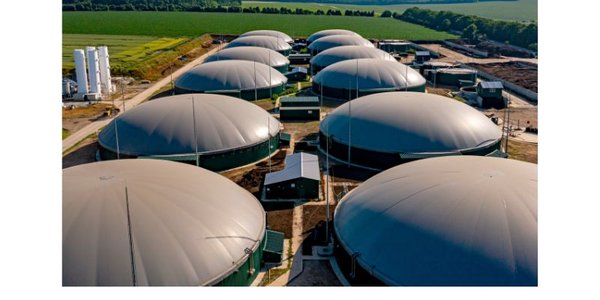
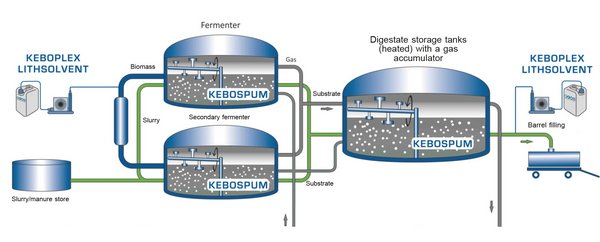
Surfactants, fats and biological residues lead to persistent surface foam in aeration tanks and secondary clarification stages. In these applications, precise surface control is essential to prevent solids carry-over and maintain aeration efficiency.
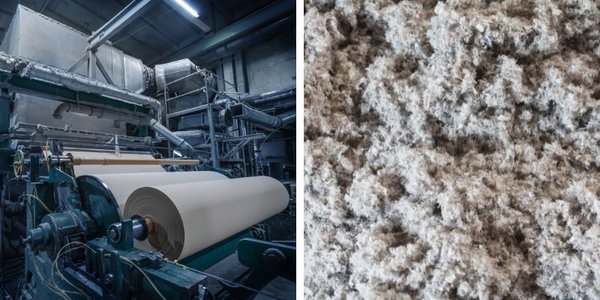
In industrial process and circulation waters – for example in the pulp and paper industry or in heavily organic-loaded effluents – foam can impair dewatering, sedimentation and effluent quality. Our intelligent KEBOSPUM® defoamers provide process-compatible, biodegradable solutions with minimal environmental impact and excellent dosing efficiency, even under fluctuating loads.
Our proven KEBOSPUM® defoamers include: KEBOSPUM LBF, KEBOSPUM AS, KEBOSPUM BWS, KEBOSPUM BWO, KEBOSPUM LF, KEBOSPUM VZ series
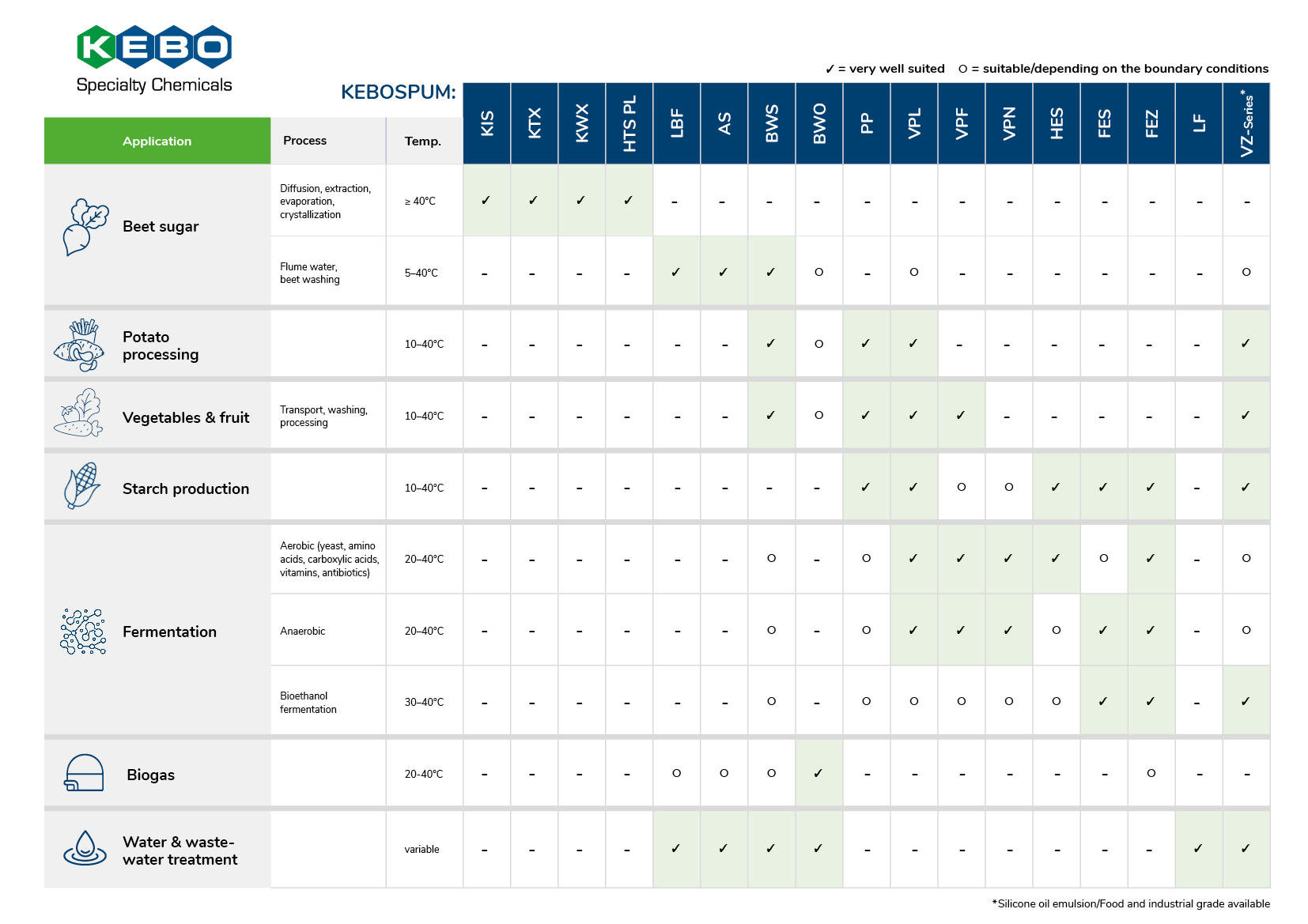
The following matrix shows the suitability of different antifoam types across selected process areas.
The evaluation considers:

The products shown on our website are only a selection of our entire product range. There is no universal remedy for the rapid removal of impurities. Some can be removed well with alkaline agents, others better in the acidic range. The large variety of conceivable cleaning problems and the large number of additives, inhibitors and ready-to-use cleaning solutions offered by us make it advisable to obtain detailed advice before starting cleaning.
The same applies to inhibitors, defoamers, scale preventers, corrosion inhibitors, pickling inhibitors, etc. Depending on the plant, material, product and the type of boiler/cooling water is used, different individual challenges arise. We are well equipped for them.
Talk to us, we will be happy to help!
On request, we can analyze deposits in our laboratory and develop a cleaning strategy based on our many years of experience, taking into account the conditions on site.