- Company
- Products
- Solutions
- Applications
- Contact


 EN
EN



Crystallisation is a key process step in sugar production. During this process, sucrose is crystallised in a controlled manner from a supersaturated sugar solution. From controlled nucleation and uniform crystal growth through to the desired sugar crystals, numerous process parameters interact.
Supersaturation is the driving force for crystal formation and crystal growth. It cannot be determined by a single measured value. Dry solids content or Brix, temperature and the purity of the sugar solution influence the conditions under which crystals form and grow. Other relevant factors include the viscosity and circulation of the massecuite as well as heat and mass transfer.
The aim is to produce crystalline sugar of the required quality. In addition to crystal size and a narrow crystal size distribution, other characteristics such as purity, colour value and fines content may also be relevant, depending on the required sugar quality.
KEBO supports sugar factories and refineries with process aids for two key stages of crystallisation: controlled nucleation and subsequent crystal
Crystal size and crystal size distribution are not determined by a single process parameter. What matters is the interaction between nucleation, crystal growth and process control.
Sugar crystallisation requires a supersaturated solution. Supersaturation is the driving force for crystal formation and crystal growth. At the same time, it must be controlled: if supersaturation is too low, particularly the smaller seed crystals introduced into the solution may dissolve again. If supersaturation is too high, the risk of spontaneous nucleation increases; under actual process conditions, secondary nucleation may also be promoted.
For controlled seeding, the process is therefore operated within a supersaturation range in which the introduced seed crystals can grow without promoting the unwanted formation of new crystals at the same time.
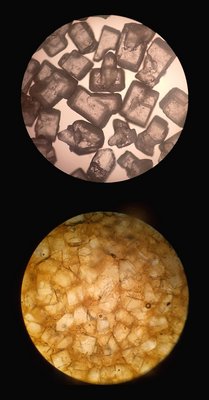
Following nucleation, the existing crystals should continue to grow as uniformly as possible. This requires stable process conditions and sufficient heat and mass transfer within the massecuite . As the crystal and dry solids content increases, the viscosity of the massecuite rises. Purity and the non sugars present also affect viscosity, solubility and crystal growth.
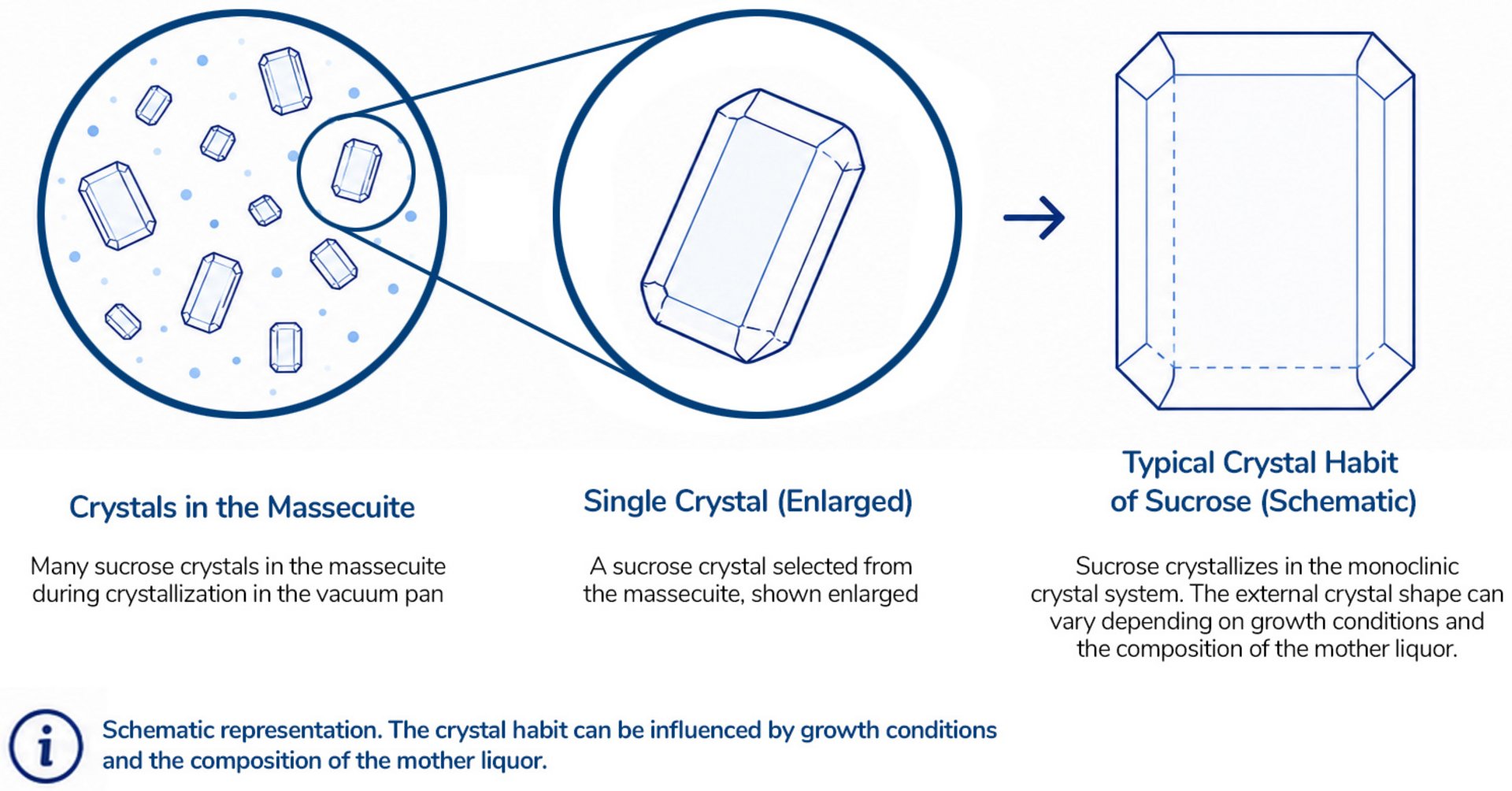
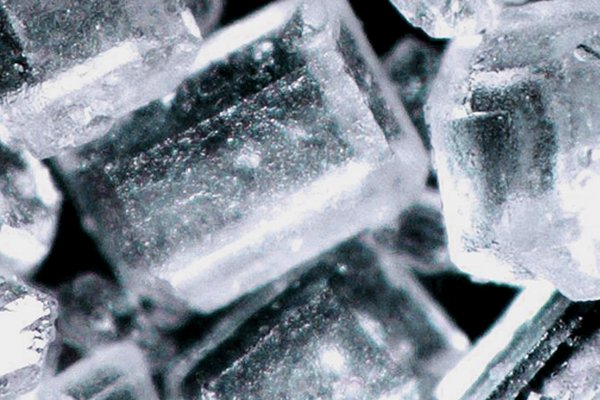
Sucrose crystallises in the monoclinic crystal system. Under suitable growth conditions, well formed crystals with clearly defined faces and edges can develop. The external crystal habit may vary depending on the growth conditions and the composition of the mother liquor.
For industrial crystallisation , however, the shape of an individual crystal is not the only relevant factor. What matters is the crystal population as a whole. Its development is influenced by the initial population of seed crystals and subsequent process control.
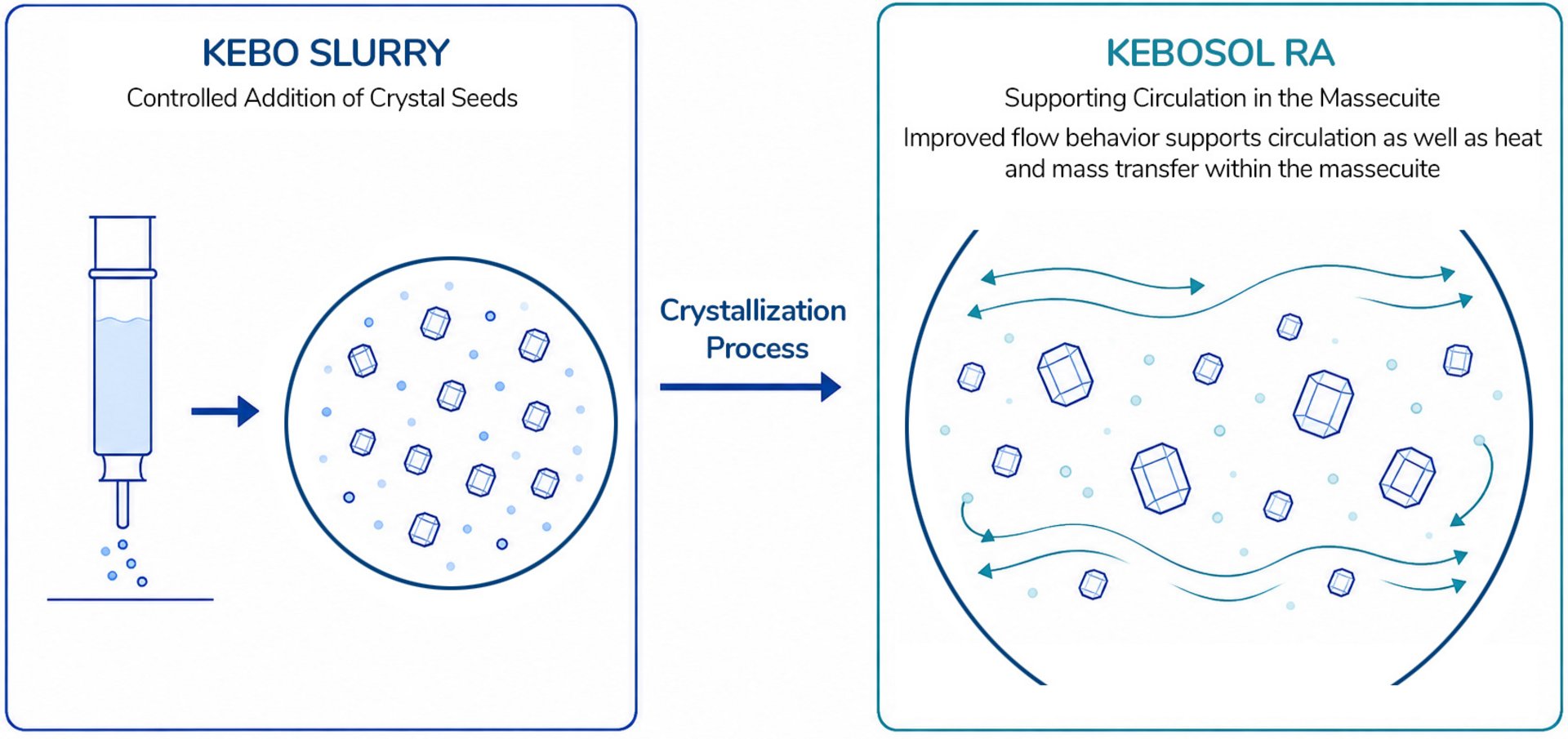
KEBO supports two distinct stages of the crystallisation process: the controlled provision of seed crystals and the conditions required for subsequent crystal growth.
For controlled and reproducible nucleation
KEBO SLURRY is a ready to use seeding suspension containing finely dispersed sucrose particles in a dispersion medium. Defined particle characteristics, a low tendency to agglomerate and a low sedimentation rate provide favourable conditions for the controlled and reproducible addition of seed crystals.
The ready to use SLURRY suspension facilitates handling and enables uniform dosing. At the same time, it eliminates the need for in house preparation of a conventional seeding suspension, for example an IPA based suspension.
For improved circulation and uniform crystal growth
As the crystal and dry solids content increases, the viscosity of the massecuite rises. This can increasingly impede circulation as well as heat and mass transfer.
KEBOSOL RA improves the flow behaviour of the massecuite and thereby supports circulation. This creates more favourable conditions for heat and mass transfer and further crystal growth.
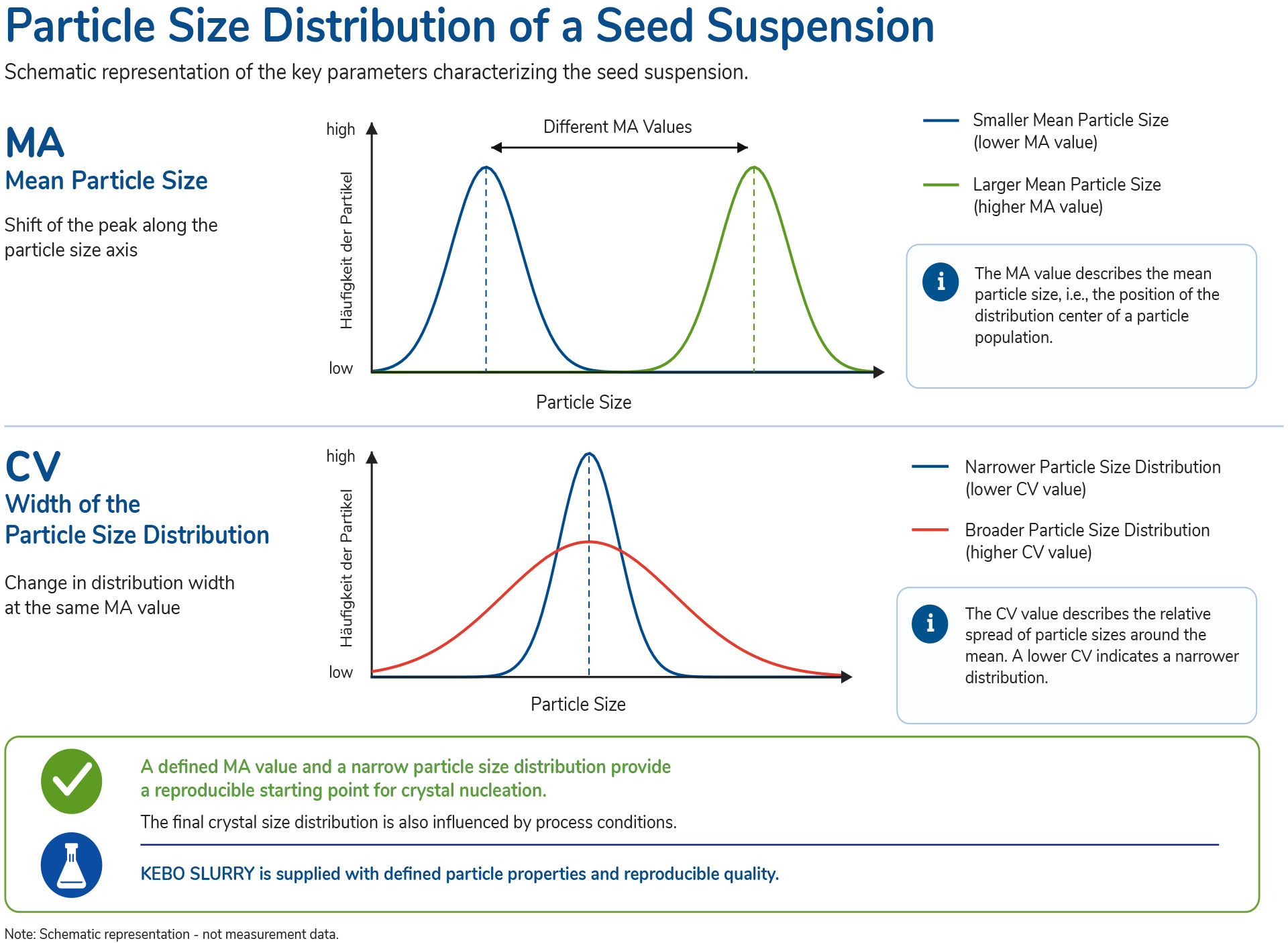
In the sugar industry, MA and CV are among the parameters used to characterise a crystal population. The two parameters describe different properties of the particle population and should be considered together.
The MA (Mean Aperture) describes the characteristic mean size of a crystal population. The CV (Coefficient of Variation) describes the relative variation in crystal size around this mean. Accordingly, a low CV indicates a narrower crystal size distribution.

MA and CV describe the size and size distribution of the sucrose particles in the seeding suspension. They therefore provide information about the initial population introduced into the crystallisation process during seeding.
However, this initial population is only one of several factors that influence the subsequent crystal size distribution. During the crystallisation process, the further development of the crystal population is influenced in particular by supersaturation, temperature, purity, circulation, possible dissolution of seed crystals and unwanted additional nucleation.
The properties of the seeding suspension define the initial population. How the crystal population subsequently develops is largely influenced by further process control.
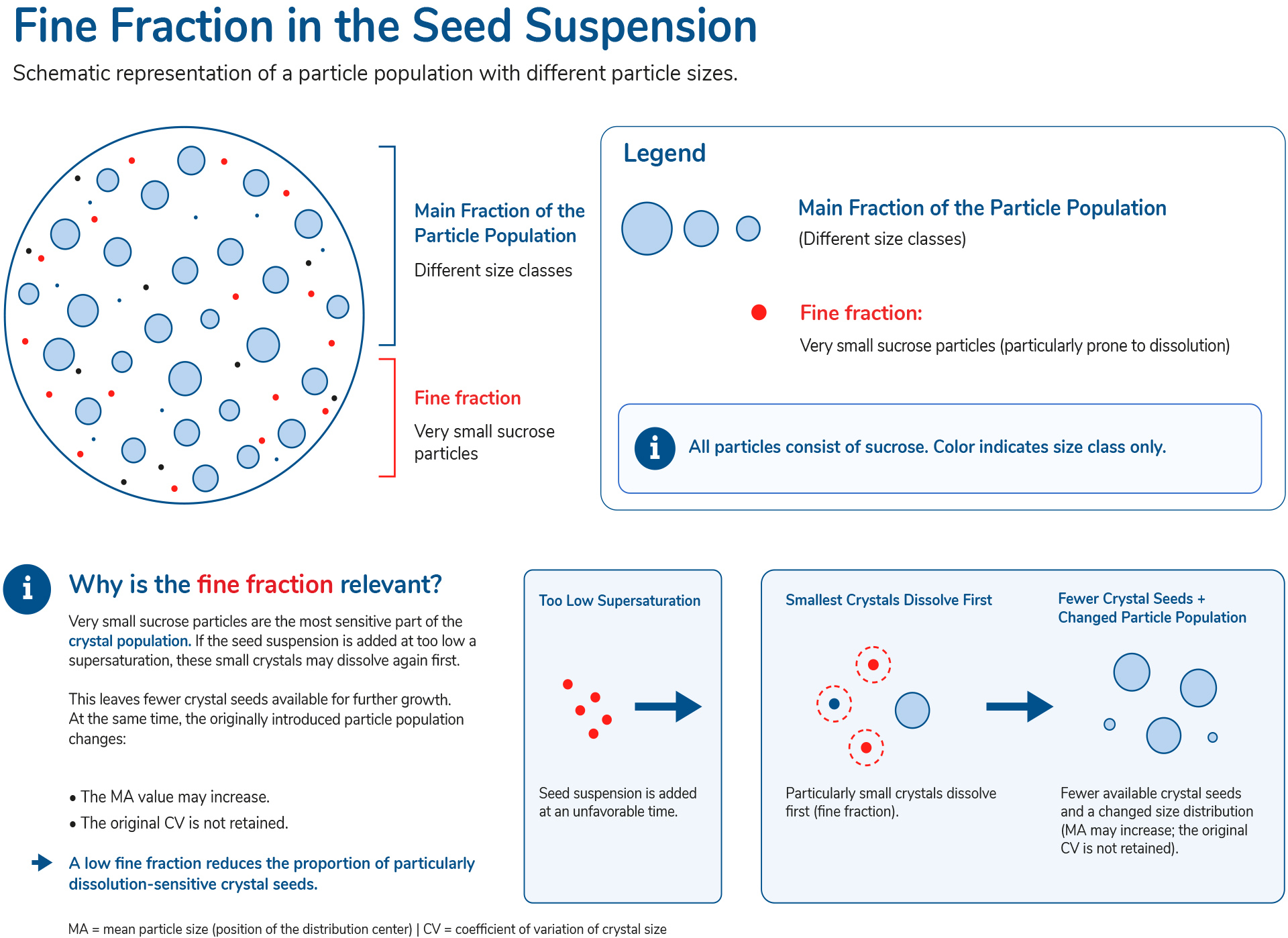
The proportion of very small sucrose particles in the seeding suspension is also relevant. Under unfavourable conditions during addition, particularly the smaller seed crystals may dissolve again and are then no longer available for further crystal growth.
A low and reproducible fines content therefore helps to provide a well defined initial population for the crystallisation process.
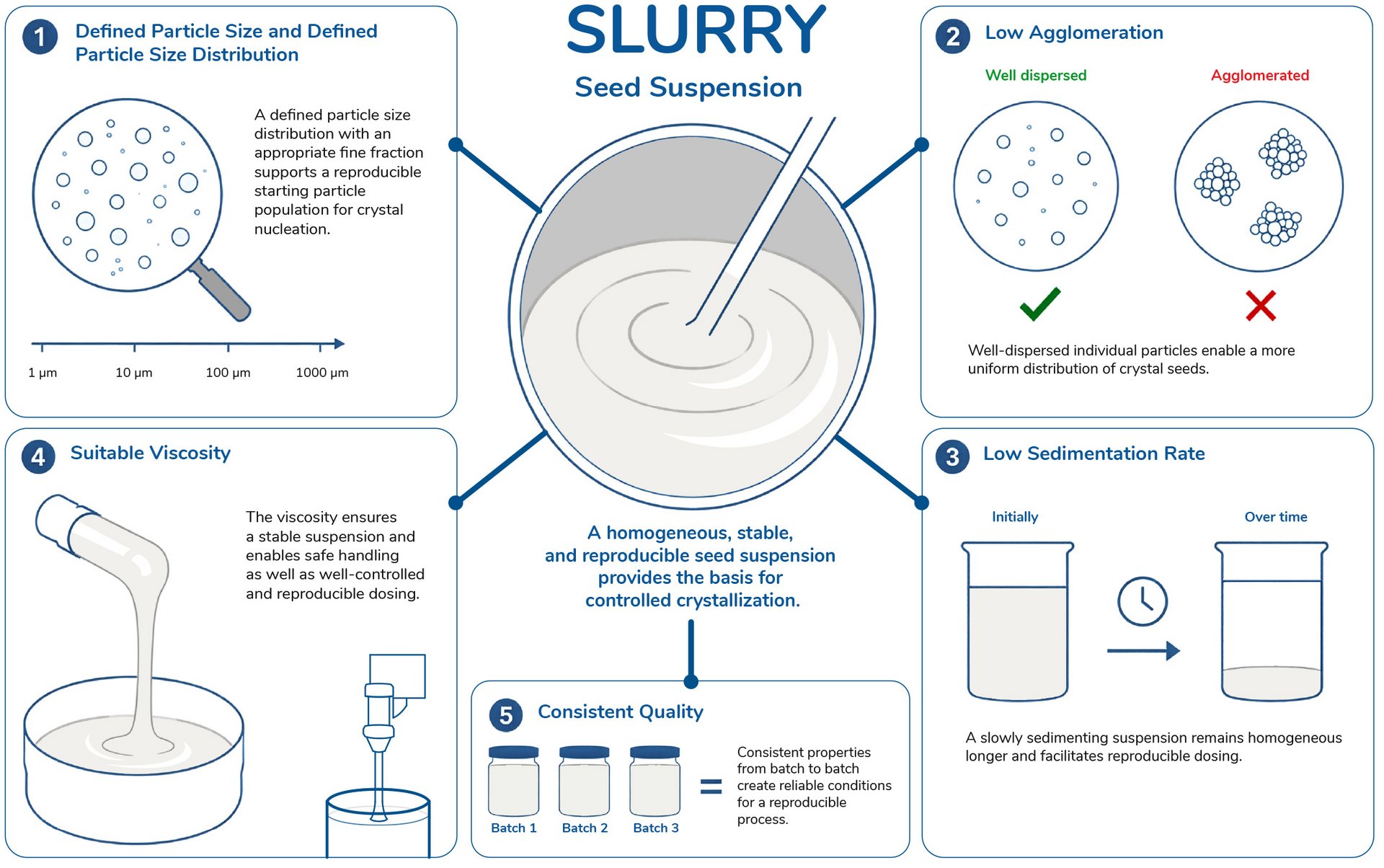
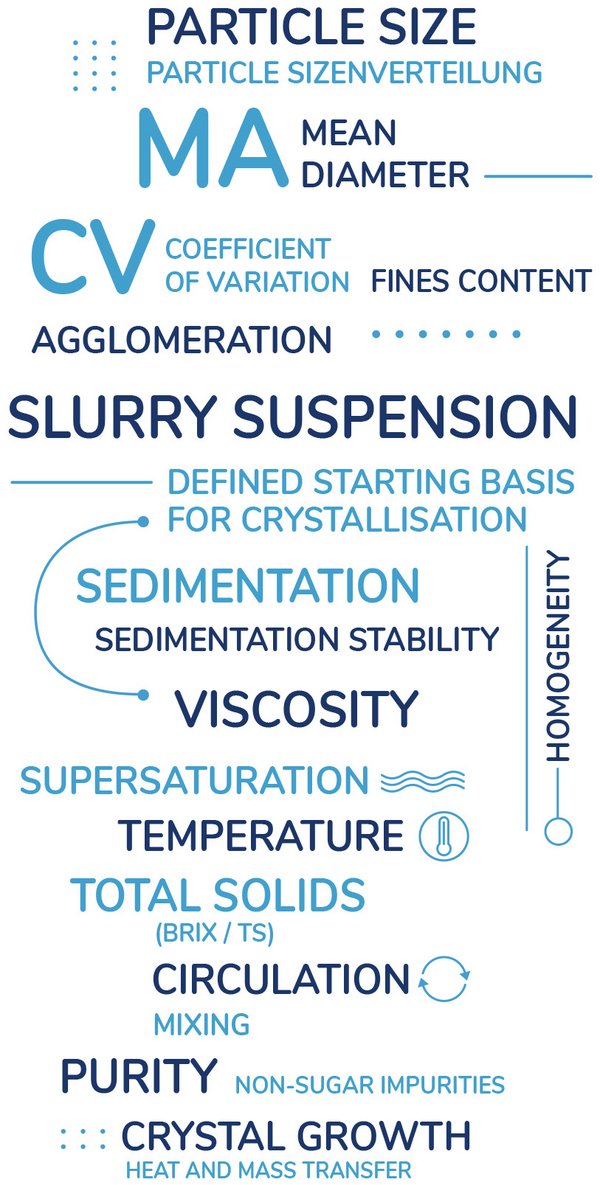
The quality of a seeding suspension cannot be assessed on the basis of a single parameter. For practical use, several properties are relevant in combination:
Defined Particle Size and Particle Size Distribution
A reproducible initial population supports controlled nucleation.
Low Agglomeration
Well dispersed individual particles enable a more uniform distribution of the seed crystals.
Low Sedimentation Rate
A slowly settling suspension remains homogeneous for longer and facilitates reproducible dosing.
Suitable Viscosity
Viscosity influences both the stability of the suspension and its handling and dosing characteristics.
Consistent Quality
Consistent properties from batch to batch provide reliable conditions for a reproducible process.
To assess the properties of a seeding suspension that are relevant to crystallisation in a differentiated manner, KEBO uses various analytical methods for the quality control of KEBO SLURRY.
Dynamic Image Analysis
Dynamic image analysis enables individual particles to be optically detected and evaluated in terms of their size and shape. This allows, among other things, particle size distributions to be assessed and agglomerates to be identified.
The analysis therefore enables a differentiated characterisation of the sucrose particles and supports the reproducible assessment of the SLURRY suspension.
Polarimetric Analysis
In addition, the sucrose content is determined by polarimetric analysis. Polarimetry uses the optical activity of sucrose and is an established analytical method in the sugar industry.
The measurement is based on internationally standardised methods developed by ICUMSA (International Commission for Uniform Methods of Sugar Analysis). ICUMSA develops and publishes internationally recognised methods for the analysis of sugar and sugar containing products.
The polarimetrically determined sucrose content is expressed in °Z on the International Sugar Scale.
Multiple Parameters One Objective
Particle size and particle size distribution alone do not fully describe the quality of a seeding suspension. Only the combination of different analyses makes it possible to specifically assess the various quality relevant properties of KEBO SLURRY.


Analytical quality control helps us to ensure consistent and reproducible product quality, thereby providing reliable conditions for use in the crystallisation process.
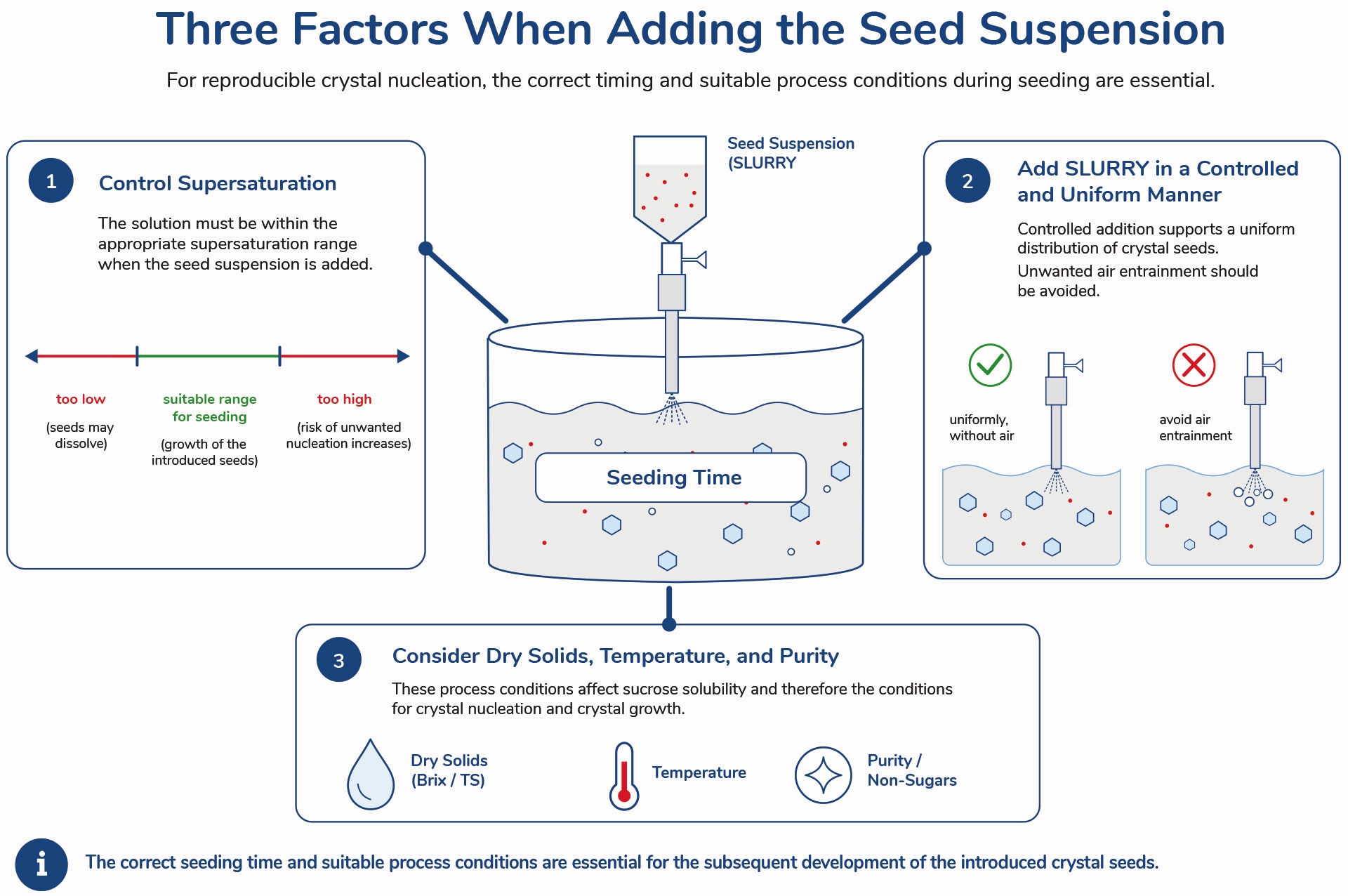
Even a high quality seeding suspension can only fulfil its function under suitable process conditions. For reproducible nucleation, the correct timing and appropriate process conditions when adding the seeding suspension are crucial.
Control Supersaturation
At the time of addition, the solution must be within the appropriate supersaturation range so that the introduced seed crystals neither dissolve again nor unwanted additional crystals are formed.
Add SLURRY in a Controlled and Uniform Manner
Controlled addition supports the uniform distribution of the seed crystals. Unwanted air entrainment should be avoided, as it can adversely affect dosing and homogeneity.
Consider Dry Solids Content, Temperature and Purity
Supersaturation cannot be assessed on the basis of a single process value. Dry solids content or Brix, temperature and purity influence the solubility of sucrose and therefore the conditions for nucleation and crystal growth.
What Is a Seeding Suspension in Sugar Crystallisation ?
A seeding suspension contains finely dispersed sucrose particles in a dispersion medium. It is added to a supersaturated sugar solution to provide a defined initial population of seed crystals for subsequent crystal growth.
What Is the Significance of the CV of a Seeding Suspension?
The CV describes the relative variation in particle size around the mean. A lower CV indicates a narrower particle size distribution. The CV therefore characterises one property of the particle population in a seeding suspension. However, it should not be considered in isolation when assessing the suspension. Other relevant properties include mean particle size, fines content, agglomeration behaviour, sedimentation rate, homogeneity and viscosity.
Does the CV of the SLURRY Determine the CV of the Finished Sugar?
No, not on its own. The particle size distribution of the seeding suspension describes part of the initial population introduced into the crystallisation process. How the crystal size distribution subsequently develops depends largely on further process control. Relevant factors include supersaturation, temperature, purity, circulation, possible dissolution of seed crystals and unwanted additional nucleation.
Why Is the Sedimentation Stability of a Seeding Suspension Important?
A low sedimentation rate helps the suspension remain homogeneous for longer. This facilitates handling and dosing and supports reproducible conditions during addition.
What Is the Role of KEBOSOL RA in Crystallisation?
KEBOSOL RA improves the flow behaviour of the massecuite and thereby supports circulation. This can create more favourable conditions for heat and mass transfer and further crystal growth. In addition, KEBOSOL RA can help to reduce agglomeration effects during crystallisation
Crystallisation cannot be considered independently of the specific process conditions.
Raw material, purity, crystallisation stage, plant technology and process control all influence which measures are appropriate.
Our chemists and application engineers support you in selecting and applying suitable process aids and in assessing your specific crystallisation conditions.


The products shown on our website are only a selection of our entire product range. There is no universal remedy for the rapid removal of impurities. Some can be removed well with alkaline agents, others better in the acidic range. The large variety of conceivable cleaning problems and the large number of additives, inhibitors and ready-to-use cleaning solutions offered by us make it advisable to obtain detailed advice before starting cleaning.
The same applies to inhibitors, defoamers, scale preventers, corrosion inhibitors, pickling inhibitors, etc. Depending on the plant, material, product and the type of boiler/cooling water is used, different individual challenges arise. We are well equipped for them.
Talk to us, we will be happy to help!
On request, we can analyze deposits in our laboratory and develop a cleaning strategy based on our many years of experience, taking into account the conditions on site.